Supercharge Claude, Cursor, and Codex.
Unstructured Foundation is a single MCP that solves agentic search for enterprise data.
Foundation solves three problems every AI agent faces: it can't see what's inside your files, it can't fit your company's knowledge into a single context window, and it can't search every system where information lives. Foundation fixes all three, giving agents access to the right information at the right time.
- Boost answer accuracy: 14x Higher Retrieval Accuracy
- Get answers faster: 85% Fewer Agent Turns
- Scale without the spend: 10x Lower Costs
Sign up to get early access to Unstructured Foundation.
The next generation of enterprise AI will be built with Unstructured Foundation.
This form requires targeting cookies to load.
To view this form, please accept targeting cookies.
See it.
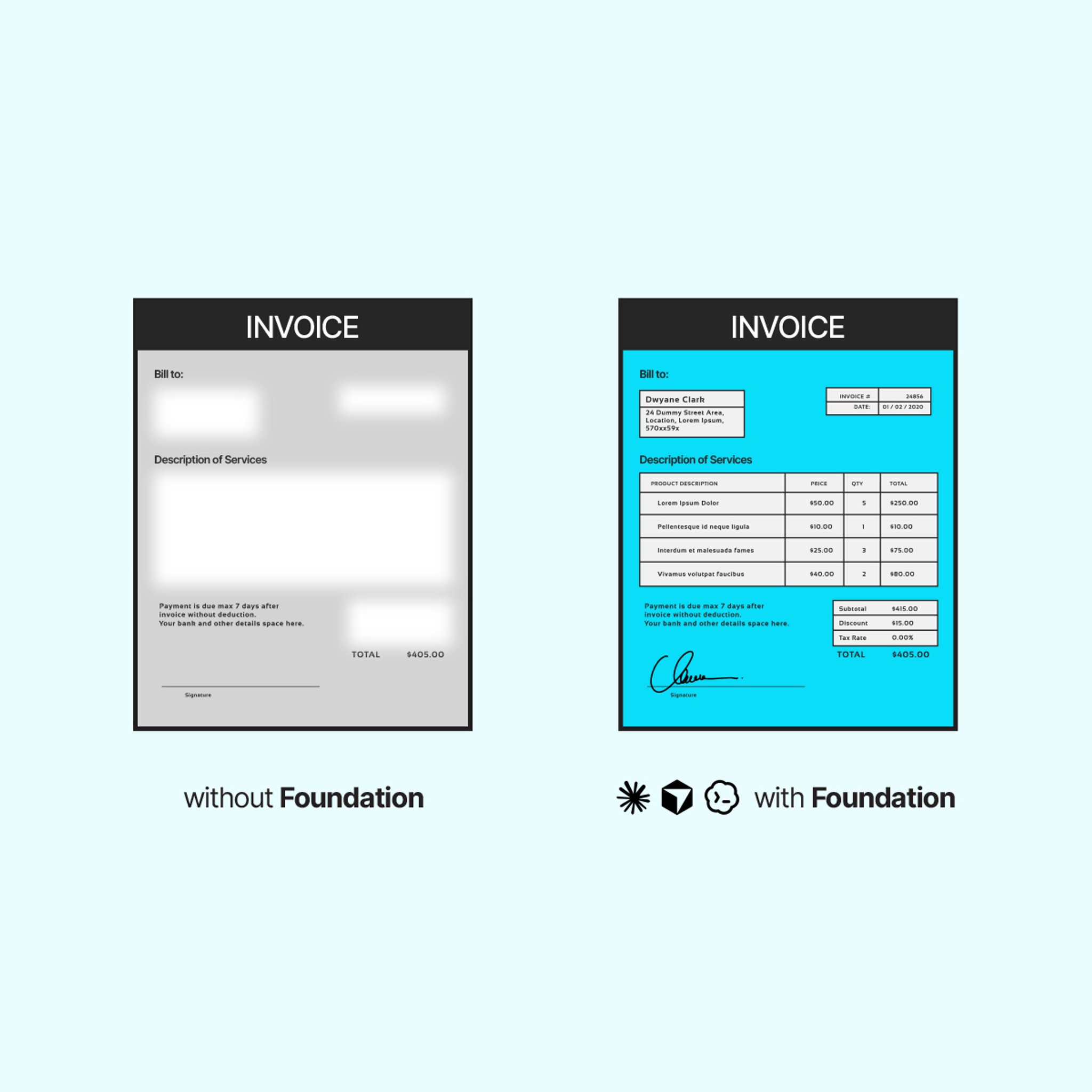
Claude sees file names. Foundation gives it X-ray vision to see inside them. More than 65 file types—including PDFs, presentations, spreadsheets, scans, audio, and video—are parsed into agent-ready context. And for the formats agents already read, Foundation reads them better: tables stay tables, layouts stay intact, and scanned documents become searchable text.
Find it.
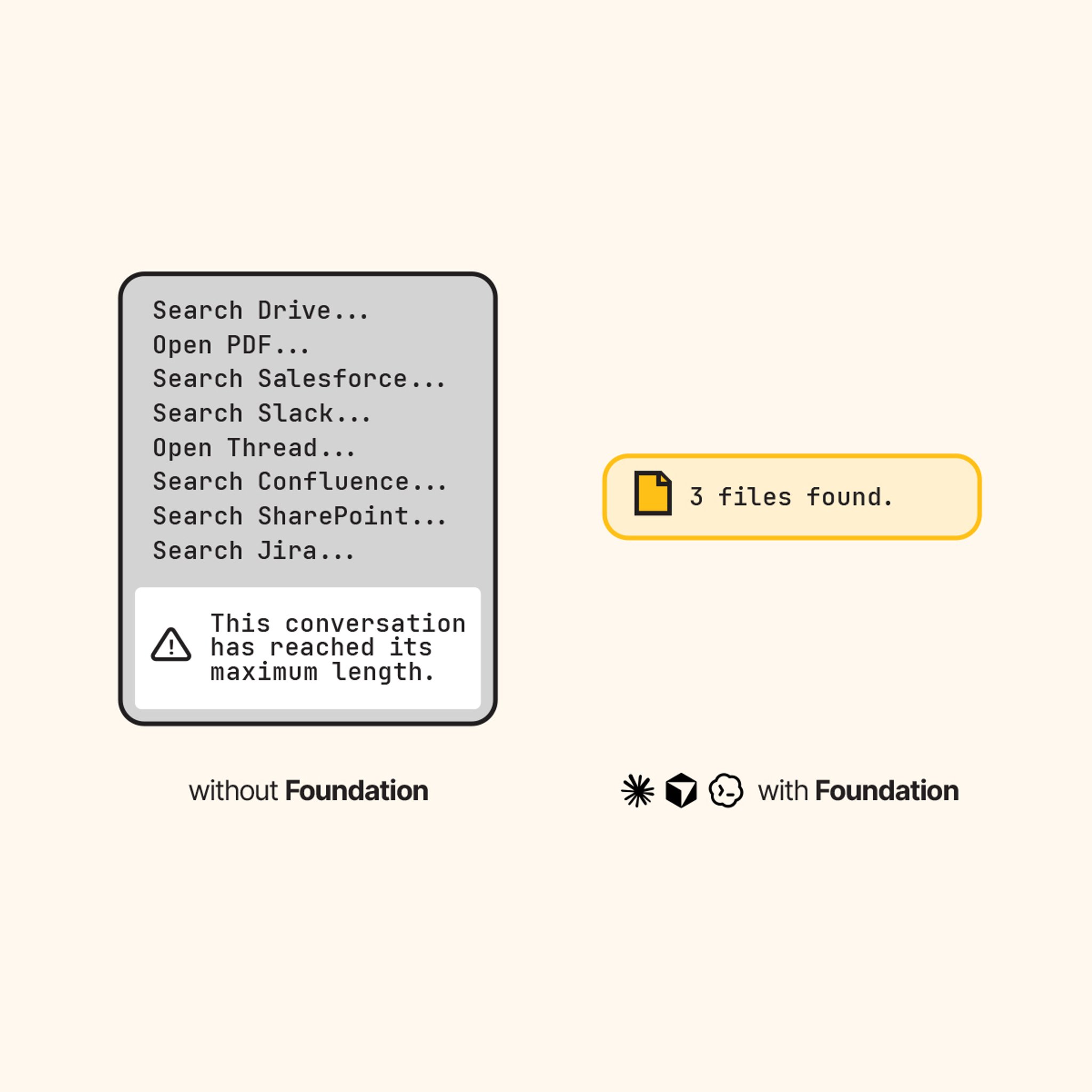
A larger context window isn't the answer. The right context is. Foundation continuously indexes your organization's knowledge and delivers the exact spreadsheet, slide, clause, or document needed for the task at hand. Instead of flooding a model with information, it hands over only what matters. A spear, not a net. The result is better answers, fewer tokens, and stronger performance
Use it.
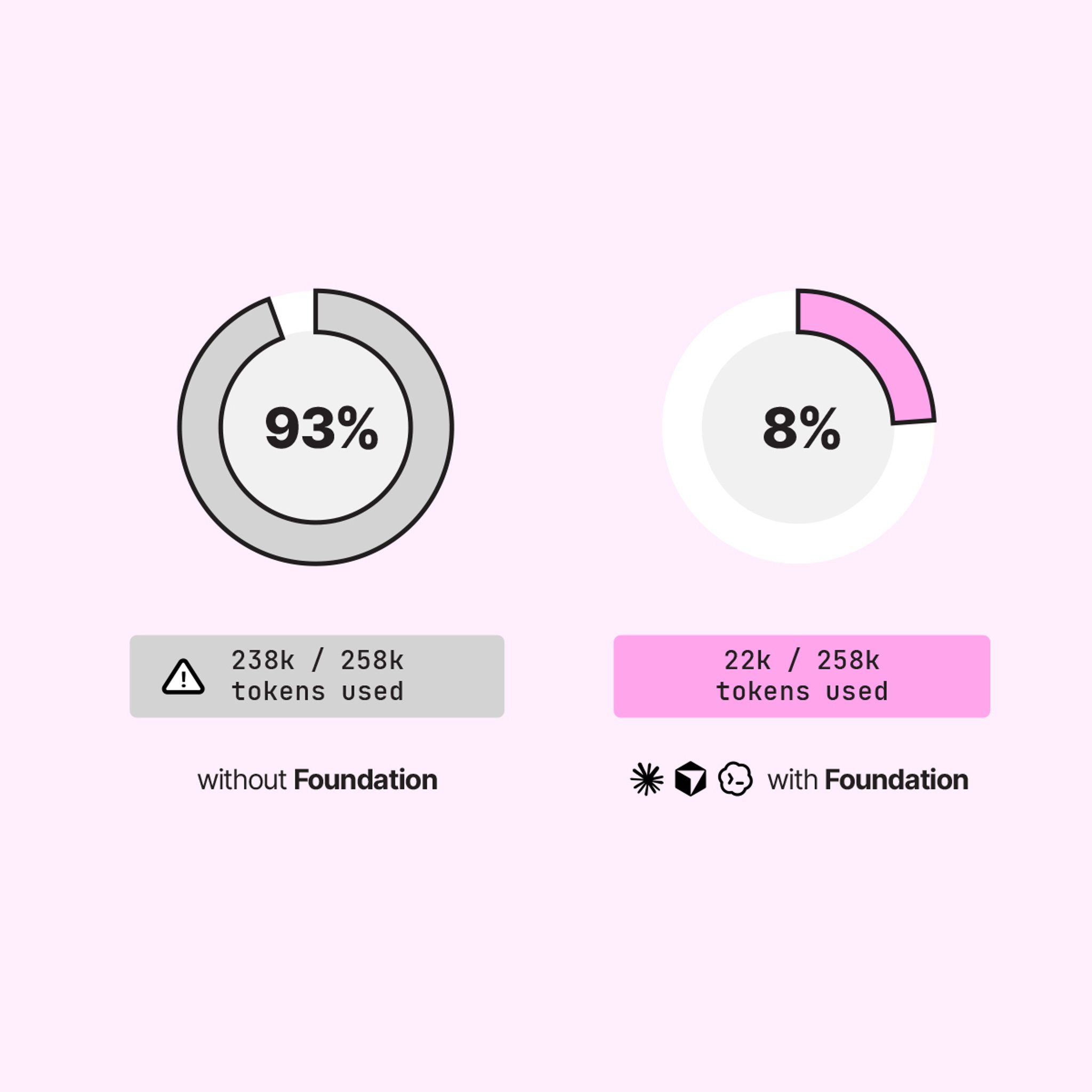
Agents aren't slow because they're thinking. They're slow because they're searching. Every extra turn spent digging through files, opening documents, and calling tools burns both time and tokens. Foundation delivers exactly what's needed up front, so agents spend less time hunting and more time working. The result is faster answers, lower costs, and performance that scales as usage grows.
How Foundation works:
Compatible AI tools:
Claude, Cursor, and Codex
Supported data sources:
Astra DB, Azure AI Search, Azure Blob Storage, Box, Confluence, Couchbase, Databricks Volumes, Delta Tables in Amazon S3, Delta Tables in Databricks, Dropbox, Elasticsearch, Google Cloud Storage, Google Drive, IBM FileNet, IBM watsonx.data, Jira, Kafka, Milvus, MongoDB, MotherDuck, Neo4j, OneDrive, OpenSearch, Outlook, Pinecone, PostgreSQL, Qdrant, Redis, S3, Salesforce, SharePoint, Slack, Snowflake, Teradata, Teradata Vector Store, VAST, Weaviate, Zendesk, and more.
Supported file types:
.3GP .AAC .ABW .AVI .BMP .CSV .CWK .DBF .DIF .DOC .DOCM .DOCX .DOT .DOTM .EML .EPUB .ET .ETH .FLAC .FLV .FODS .HEIC .HTM .HTML .HWP .JPEG .JPG .M4A .MCW .MD .MPG .MW .ODT .OGG .OPUS .ORG .P7S .PBD .PCM .PDF .PNG .POT .PPT .PPTM .PPTX .PRN .RST .RTF .SDP .SXG .TIFF .TSV .TXT .WAV .WEBM .WMV .XLS .XLSX .XML .ZABW .MOV .MP2 .MP3 .MP4 .MPEG .MPEGS
FAQs
Answers to our most common questions around Foundation.
An LLM can read the document you point it at. What it can't do is see across your whole corpus, search the systems your data actually lives in, or pull the one slide that matters out of millions of files. That's what Unstructured Foundation handles: indexing everything once, keeping it current, and handing the agent the right context up front instead of asking it to hunt.
Claude is great at processing files you give it. Drop a PDF into the chat and it works fine. But when you connect Drive or SharePoint and ask Claude to search across them, it misses most of what's actually there. Foundation is the search layer underneath, indexing the whole corpus, keeping it current, and handing the agent the exact passage that matters instead of flooding the context window with whole documents. This cuts tokens and the number of agent turns substantially. We've measured up to 85% fewer turns and 10x lower costs.
We are a different layer. Memory products (Mem0, Letta) remember what you said: your preferences, prior conversations, personal facts. Unstructured Foundation remembers what your organisation has: contracts, decks, threads, audio and video. One is conversational memory. The other is document substrate. You probably want both.
Nope. Unstructured Foundation sits behind whichever agent you point it at, whether that's Claude, Cursor, or Codex, and serves the same indexed corpus to all of them. Same question from any tool, same answer. You configure it once.
Unstructured Foundation is more than just a vector database: it parses your messy files, builds an index, keeps it synced as documents change, handles permissions at query time, and is served to you as an MCP so any agent can call it.
Unstructured Foundation watches your sources and re-indexes incrementally as files change. Edit a contract on Monday, ask the agent about it on Tuesday, you get the Tuesday version, not the snapshot from when you first connected the source. You never re-upload or re-index anything yourself.
Your source documents stay where they are, in Drive, SharePoint, Dropbox, Slack. We don't centralise them. What we keep on our end is an index made from the full text of each document, along with summaries and metadata, so agents can search and retrieve against them.
If you can't see a file in Drive directly, you can't see it through Unstructured Foundation either. Foundation reads your existing permissions and respects them. The agent only ever surfaces what you'd already be allowed to see.